
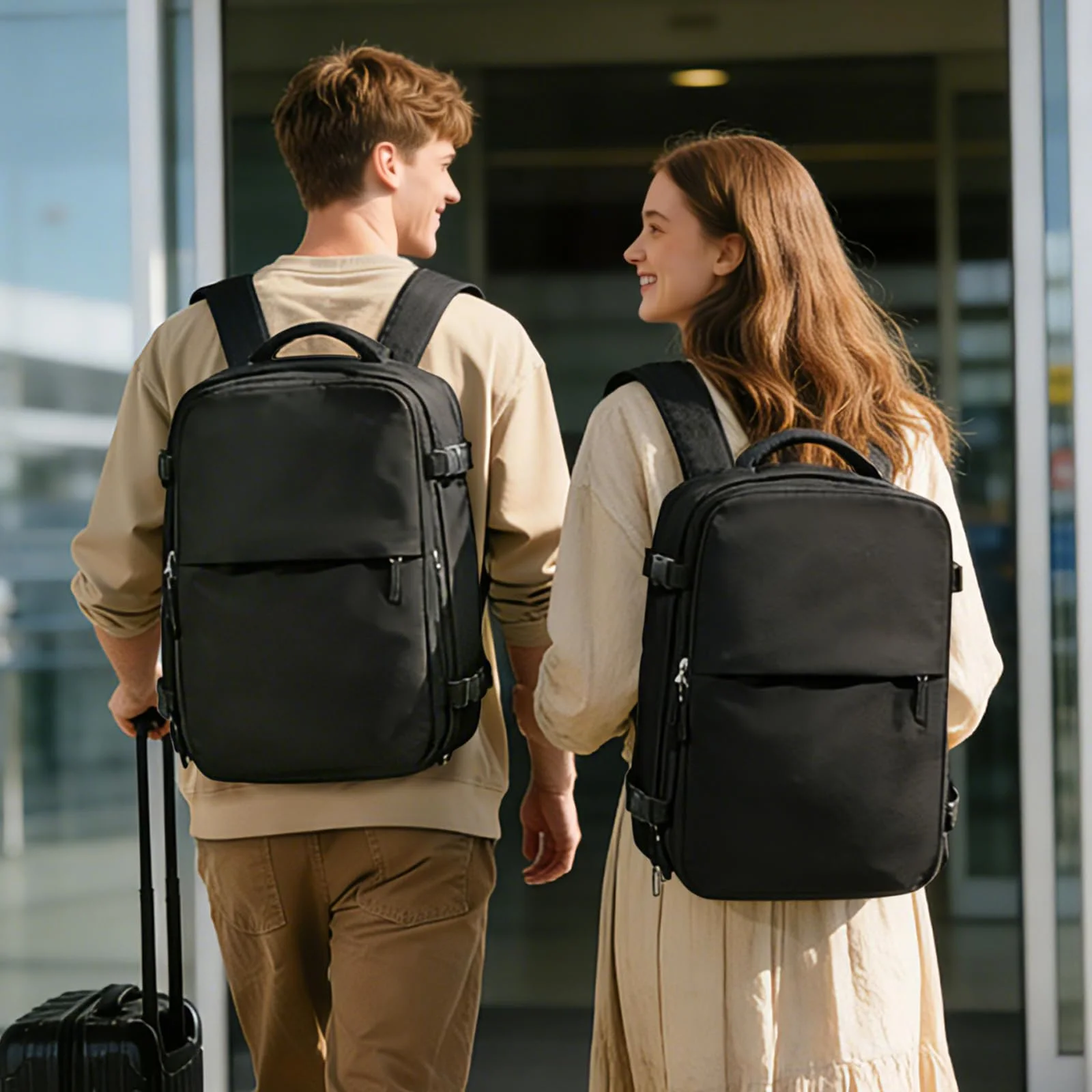
What a personal item is and what a carry-on is
A personal item is the small bag you are allowed to bring in addition to a larger carry-on on many fares. Airlines describe it as the bag that must fit under the seat in front of you. Examples are a small backpack, a briefcase or a tote. A carry-on is the larger bag you put in the overhead bin. Carriers publish maximum exterior dimensions for both types or for the carry-on alone.
Rules vary by airline. The Transportation Security Administration does not set a national bag size. Each airline sets its own limits and may include handles, wheels and external pockets when they say a size. Some airlines print explicit measurements for a personal item. Others only say it must fit under the seat. If your fare includes only a personal item, a larger bag for the overhead bin may not be allowed. Gate agents make the final decision about whether a bag must go to checked baggage. We focus on the published numbers here so you can match your bag to the allowance before you travel.
The numbers airlines print, airline by airline
American Airlines lists a personal item up to 18 x 14 x 8 inches. Its carry-on limit is up to 22 x 14 x 9 inches with handles and wheels included in the measurement. United Airlines prints a personal item size of 17 x 10 x 9 inches, shown on some pages as 9 x 10 x 17. Its carry-on limit is 22 x 14 x 9 inches including handle and wheels. Note that on Basic Economy most trips allow only a personal item.
| Airline | Personal item | Carry-on |
|---|---|---|
| American Airlines | 18 x 14 x 8 in | 22 x 14 x 9 in |
| United Airlines | 17 x 10 x 9 in | 22 x 14 x 9 in |
| Delta Air Lines | No size printed | 22 x 14 x 9 in |
| Southwest Airlines | No size printed | 24 x 16 x 10 in |
| Alaska Airlines and Hawaiian Airlines | No size printed | 22 x 14 x 9 in |
| JetBlue | 17 x 13 x 8 in | 22 x 14 x 9 in |
| Frontier Airlines | 18 x 14 x 8 in | 24 x 16 x 10 in |
| Allegiant Air | 18 x 14 x 8 in | 22 x 16 x 10 in |
Delta Air Lines does not print a personal item size. The company says the personal item must fit under the seat in front of you. Delta’s carry-on rule is 22 x 14 x 9 inches, with a maximum of 45 linear inches, handles and wheels included. Southwest does not print a personal item size either. Its carry-on allowance is 24 x 16 x 10 inches including wheels, handles and attachments.
Alaska Airlines and Hawaiian Airlines share a policy page that does not give a personal item size. Their carry-on is 22 x 14 x 9 inches with wheels and handles included, and the sides must add up to no more than 45 inches. JetBlue prints a personal item size up to 17 x 13 x 8 inches. Its carry-on limit is 22 x 14 x 9 inches. Both JetBlue allowances apply on all fares.
Frontier Airlines lists a personal item up to 18 x 14 x 8 inches and up to 35 pounds. Handles, wheels and straps are included in those measurements. Frontier includes a note that the personal item size is checked at boarding. Carry-on space with Frontier is sold separately or as part of a bundle, and its carry-on dimension is 24 x 16 x 10 inches. Allegiant Air allows a free personal item up to 18 x 14 x 8 inches. Its paid carry-on is up to 22 x 16 x 10 inches. Allegiant specifically says exterior measurements include wheels, pockets and handles.
The Transportation Security Administration sets no bag size. That puts responsibility on the airline rules above. Check the exact numbers for your carrier before you pack.
Why a soft backpack measures bigger when full, and how to measure your own bag
Soft backpacks expand when you pack them. Fabric and zippers give way to the contents, so the depth and overall bulge will grow beyond the empty bag measurement. Pockets and attachments add thickness. Wheels and handles add to exterior measurements when an airline says they are included. A soft bag that looks compact when empty can exceed printed limits once filled.
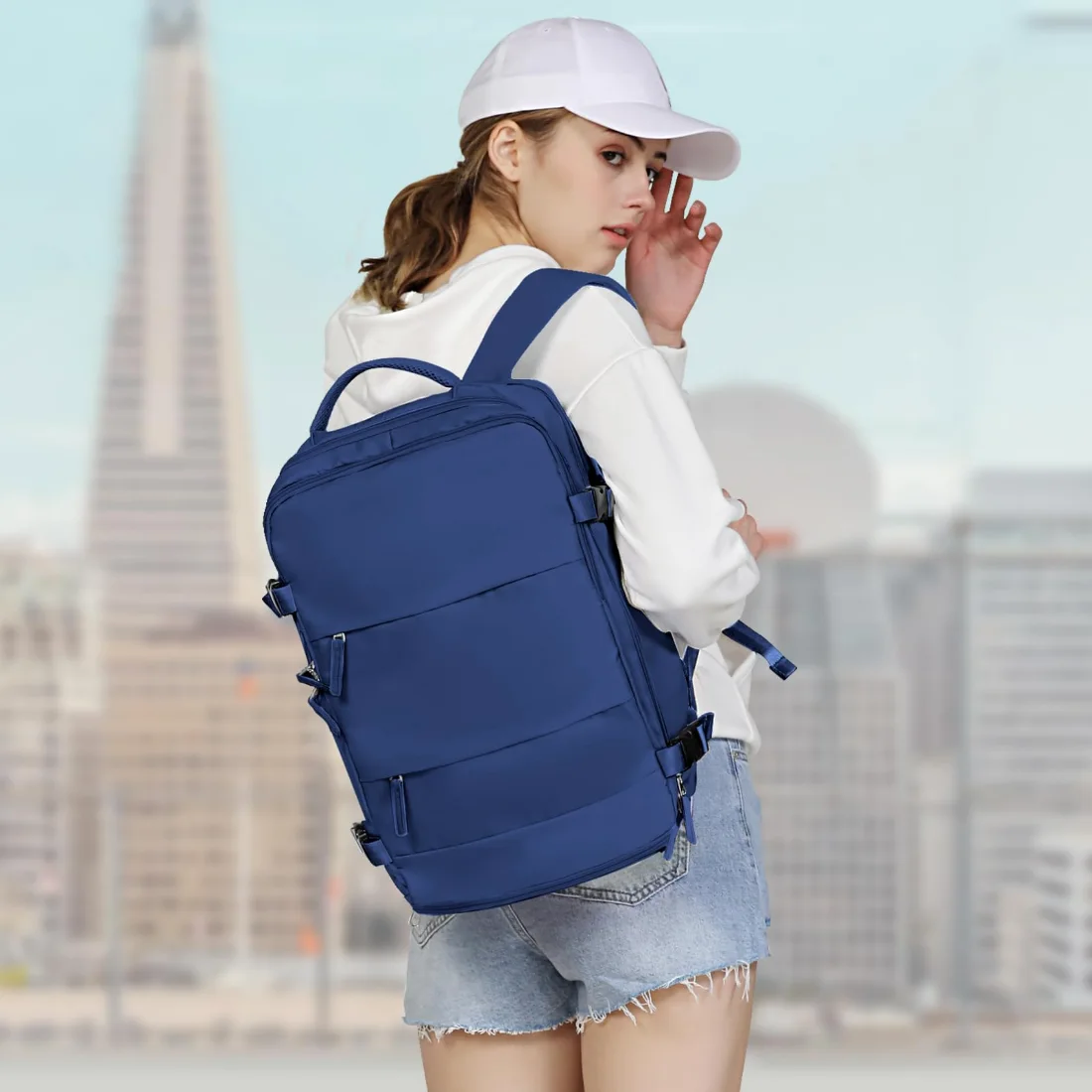
Measure your bag the way airlines say they measure it. Start with the bag empty and zipped, then include any wheels, telescoping handles and external pockets. Use a cloth tape measure and record height, width and depth at the bag’s largest points. After that, pack the bag as you normally would for travel and measure again. That packed measurement is the one that matters at boarding.
For a personal-item check, try placing the packed bag under a seat or in a mock under-seat space to confirm fit. If you cannot do that, measure the depth from the back panel to the front pocket and add the thickness of any attachments. When an airline uses linear inches you can add together height, width and depth to compare to the carrier’s total. Keep in mind that our bag dimensions are measured by hand on an empty bag. The 20 liter travel backpack measures 15.8 x 11.8 x 7.9 inches. The 25 liter measures 16.5 x 12.6 x 7.9 inches and weighs 1.7 pounds. The 30 liter is 18.5 x 13 x 7.9 inches. The 45 liter is 18.5 x 12.6 x 8.7 inches.
Choosing a backpack size for your fare
Match your backpack to what the airline permits and to how you travel. If your fare allows a personal item only, the smaller travel backpacks are the obvious place to start. Our 20 and 25 liter travel backpacks fall within several common personal-item limits. They are inside the 18 x 14 x 8 inches allowed by American, Frontier and Allegiant. The 20 and 25 liter packs also fit JetBlue’s 17 x 13 x 8 inch personal-item size. None of our travel backpacks is thinner than 10 inches across. That means they do not fit United’s personal-item dimensions of 17 x 10 x 9 inches.
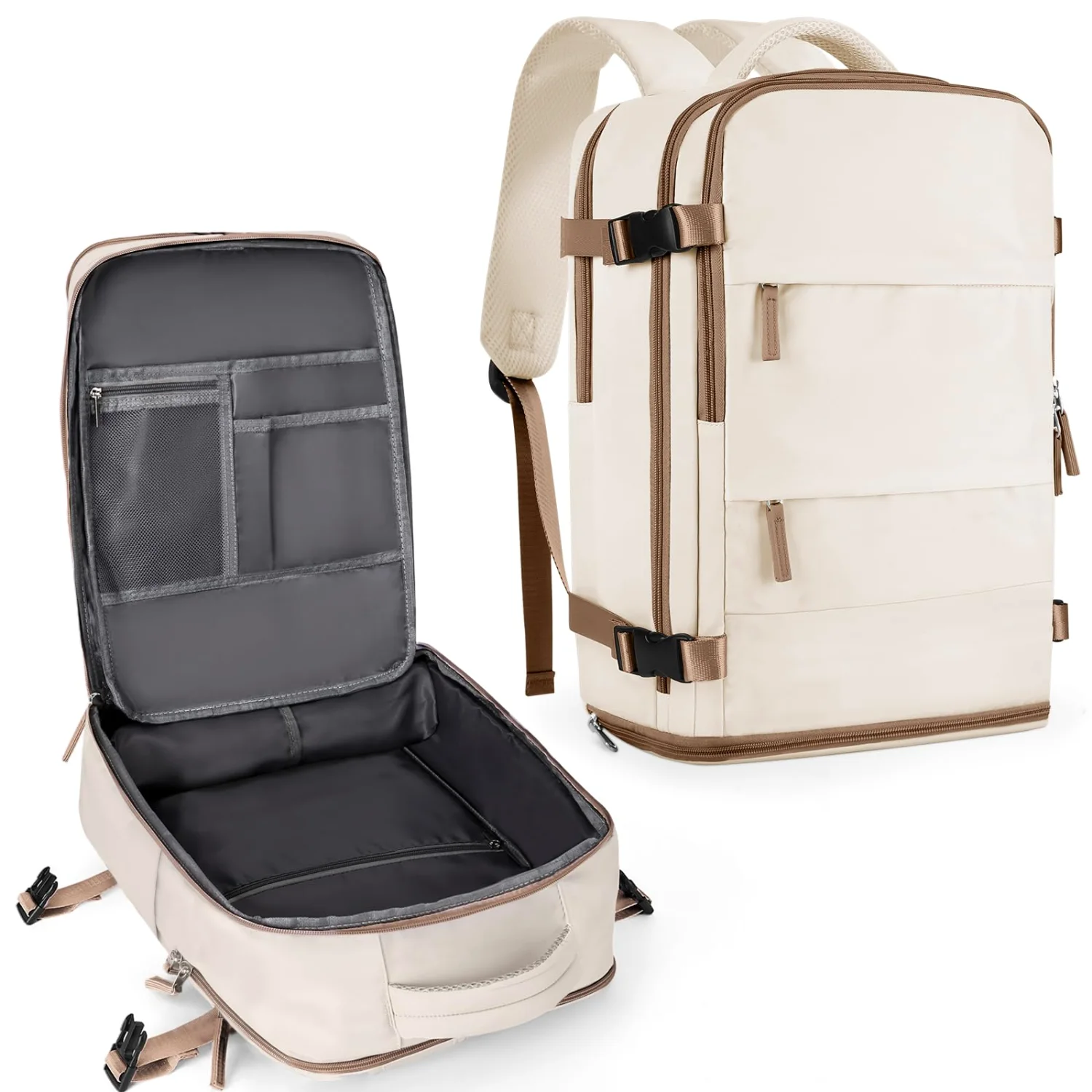
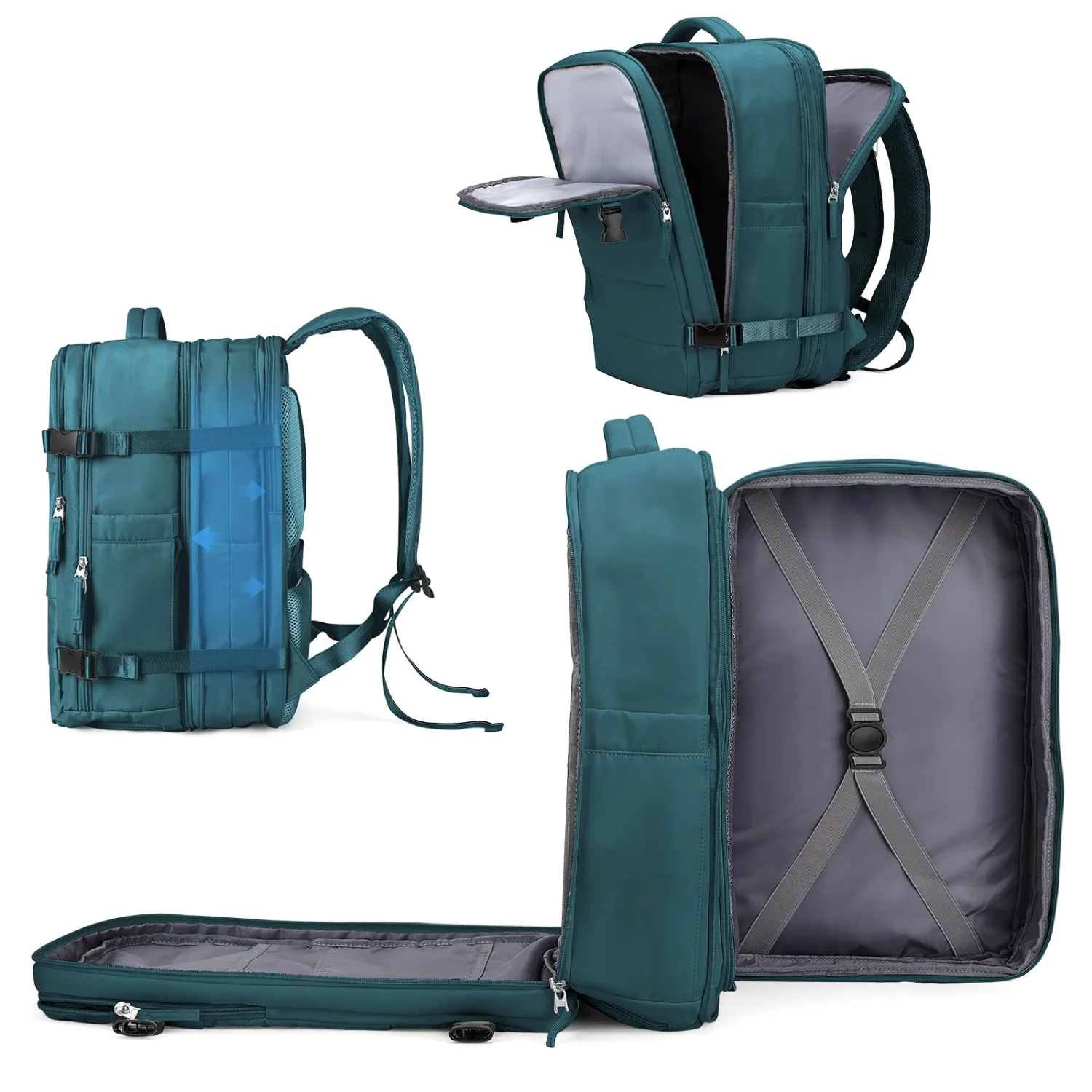
Reserve the 30 to 45 liter sizes for overhead-bin use. The 30 and 45 liter backpacks measure within a 22 x 14 x 9 inch carry-on limit. Some carriers, including United on Basic Economy fares, may only allow a personal item and not a carry-on. We cannot guarantee gate acceptance. The airline agent decides whether a bag must be checked.
One more practical detail. Our travel backpacks include a USB port that works with your own power bank. The bag does not contain a battery. If you travel with a power bank keep it accessible for security and for the flight.
Liquids and power banks at security
Liquids follow the TSA rule. Place containers of 3.4 ounces (100 milliliters) or less inside a single quart-sized bag, and pack that bag in your carry-on where you can reach it at the checkpoint.
Spare lithium batteries and power banks must travel in carry-on baggage only. The Federal Aviation Administration requires that they be removed from a bag that is checked at the gate. Keep power banks with you and carry them in an easy-to-reach pocket for screening. Our backpacks’ USB port is a convenience for charging with your own power bank. Be sure your power bank is permitted by the airline and that you carry it in the cabin, not in checked luggage.
A question about a size or a pocket? Write to underseat@coowoz.org and everyone at COOWOZ will answer.